January is meant to feel like a reset. A fresh start. Yet for many of us it doesn't. It arrives with a question instead: Why am I still so tired?
Not just physically, but mentally and emotionally. It's understandable.
School holidays are still in full swing, routines are loose-ish, some people are back at work while still holding the logistics of family life. The calendar may have flipped, but the load hasn’t lifted. If anything, it's bigger, especially without school or child care in place.
December usually brings less structure and more stimulation. More decisions. More noise. More holding it all together. From the body’s point of view, that isn’t rest. It’s extended effort. So even when the season is joyful, December is rarely restorative.
So when January asks us to function again, the body has not actually had time to recover. It has been adapting, responding and holding things together.
That lingering tiredness and perhaps procrastination is not 'you'. It is information. It is the body asking for something.
6 Signs Your Body Is Under More Load Than You Realise
These signs are usually subtle. They don’t arrive all at once. And because they build slowly, we tend to normalise them.
1. Sensory sensitivity
Everyday things start to feel louder or sharper than usual. The kids playing might suddenly feel overwhelming. You may notice you’re more on edge, startle easily at sudden noises, or feel irritated by things that wouldn’t normally bother you, even small things like chewing, background noise, or being talked over.
2. Tired but wired sleep patterns
You feel exhausted during the day, yet struggle to properly unwind at night. Sleep feels lighter or more fragmented. You’re tired, but your body doesn’t quite know how to switch off.
3. Decision fatigue
Small tasks feel heavier than they should. Focus drops. Procrastination creeps in.
This isn’t disorganisation or not coping. It’s your body saying, we’ve made enough decisions for now. When even simple choices feel draining, it’s often because your system has been “on” all day without enough recovery.
4. Cravings and energy dips
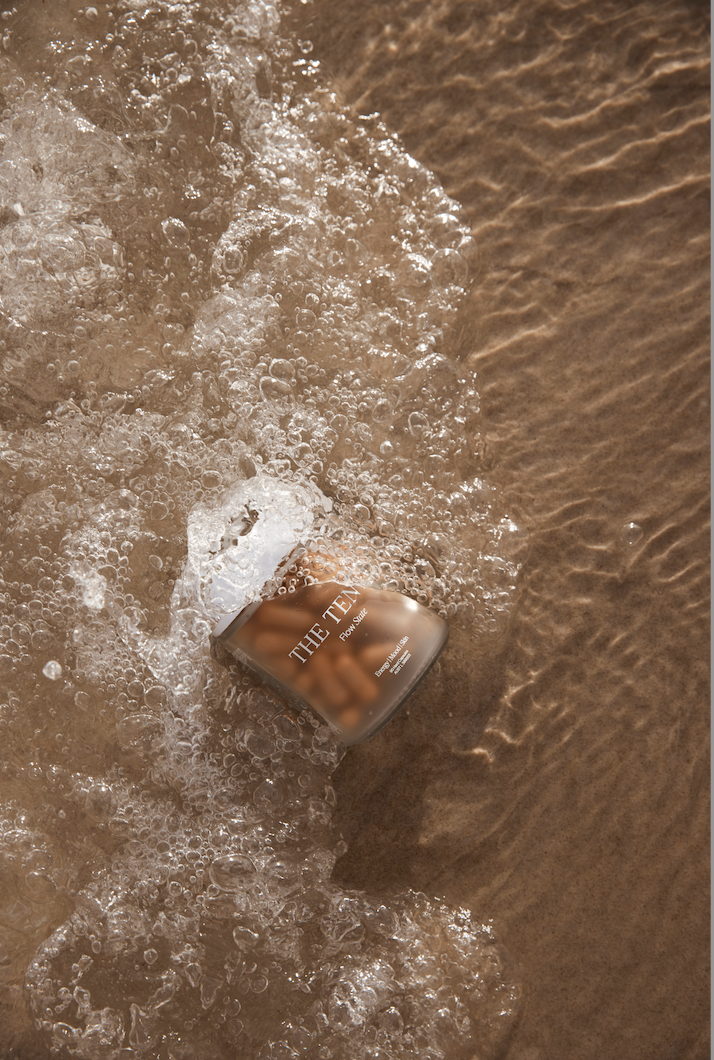
Cravings aren’t bad choices or a lack of willpower. They’re often the body asking for fuel. Minerals. Nutrients. Energy. When the body is under sustained stress, it burns through nutrients faster. It’s simply trying to keep the lights on. This is where a supplement like The Tenth Co Flow State can help you feel more energised and supported in your everyday.

5. Late-night alertness
This can happen when cortisol, our main stress hormone, stays elevated later into the evening than it should. Normally, cortisol rises in the morning to help us wake up, then gradually falls as the day goes on, something that can feel almost impossible when there’s dinner, bath, bedtime, and overtired children in the mix.
But when the body has been under sustained stress, that rhythm can become blurred. Instead of winding down, the system stays alert. The body gets a second wind just when it should be slowing down.
It’s not inconsistency or poor discipline. It’s a nervous system that hasn’t yet received the signal that it’s safe to switch off. And while another episode of true crime might feel comforting in the moment, it often keeps that alert state ticking along a little longer.
6. Physical signs that don’t quite add up
When the body stays in stress mode for too long, it burns through vitamins and minerals involved in energy, mood, and stress regulation. Over time, that increased demand can show up as fatigue, brain fog, muscle tension, hair loss, skin flare-ups, feeling sore, foggy, or more tired than rest alone seems to explain.
None of these signs mean something is wrong with you. They usually mean your body has been carrying more than it’s had time to recover from.
And by the time these signals become noticeable, it’s rarely because anything suddenly changed. It’s because the system has gone beyond it's capacity.
The Kind of Support Bodies Actually Need
This is the hopeful part.
When the body has been under sustained load, it does not recover just because the schedules pauses over a holiday. It recovers when it is given regular chances to switch off, even briefly. In the day to day.
Most of us were never taught how to do that, especially in the messy middle of life: staying on top of laundry, careers, feeding everyone 10 times a day, creating core memories, hydrating, breathing, while being a present mum, partner and friend... and so much more.
The good news is: Switching off does not require long breaks, perfect routines or stepping away from it all. It starts with learning how to interrupt stress in small ways throughout the day. Moments that tell the body it is safe to soften.
Those moments matter more than we realise. Over time, they rebuild capacity, reduce reactivity and make it easier for the body to recover, both mentally and physically.
The seven types of rest framework, developed by Dr Dalton-Smith can be used as an exercise to explore areas of our lives we can change to improve overall well-being. We made a post about it:
'Why does resting make me feel quilty?' - Most women.
For many women, rest has been framed as something we earn.
If everything is done. When everyone else is okay. And there’s nothing left on the list. Which, in reality, rarely happens.
For women (and mums) especially, everyday life and holidays don’t reduce responsibility. They add to it. There is more organising, more anticipating, more holding things together. When so much of the invisible planning and emotional labour sits with women, stopping can feel not just uncomfortable, but almost impossible, even when you’re exhausted.
There’s often an unspoken belief running underneath it all: if I don’t do it, who will? So rest feels a bit selfish, indulgent, unproductive, or like something you’ll get to later. When in fact, the opposite is true. Rest is productive.
Biologically, rest isn’t indulgent. It’s how the body switches out of stress mode and recovers and regains capacity.
Change doesn’t start with big gestures. It starts with small decisions. Letting the house be messier. Letting children see us rest. Asking friends not to clean up before we come.
That’s where things begin to shift, not by doing more, but by allowing ourselves to do less, together.
A More Sustainable Way Forward
One of the most helpful shifts is realising that rest isn’t something you earn. It’s something the body needs in order to keep going.
Dr Oscar Serrallach, our medical advisor, explains this simply. The body is designed to move between stress on and stress off. Effort and recovery. Doing and repairing. That natural back and forth is how resilience is built.
Stress itself isn’t the enemy. Stress can be motivating, purposeful, even joyful. The problem is when life becomes stress on, on repeat. Like driving with your foot stuck on the accelerator, never quite finding the brake.
For many women and mothers, this isn’t really a choice. It’s structural. The mental load. The constant task switching. The vigilance. The invisible holding of everyone else’s needs, all day, every day.
Over time, it can start to feel like your body is working against you. Like it’s letting you down. Like you’re not keeping up anymore. And it’s easy to turn that inward and think you’re failing or falling behind. You’re not.
What’s usually happening is much simpler. Your body and mind have been doing too much for too long without enough support. Most women know this deep down, even if they don’t always have language for it.
When support is there, the relationship with your body begins to change. Instead of fighting it or pushing through it, you start working with it. Things don’t suddenly become easy, but they do start to feel steadier.
This is why Dr Oscar doesn’t talk about pushing harder or having more willpower. He talks about building systems of care around the body.
Tiny things done often. Small things done daily. Bigger things when life allows. Not perfection. Not superhuman effort. Just enough support layered into real life so the nervous system can switch on and switch off, instead of staying stuck in 'on' mode.
That might look like deliberately practising moments of switching off during the day. Brief pauses. Quiet moments. Different kinds of rest woven in where you can. Just regular reminders to the body that it’s safe to soften.
It’s the same reason athletes build recovery into training. Not as a reward, but as a requirement. Without recovery, performance drops. Injury follows. Eventually, the body forces a pause.
Everyday life works the same way.
January doesn’t ask for reinvention. It asks for steadiness. Rhythm. A few things that reliably help your system slow down, built into life as it is, not added on top of it.
And the good news is this. Once you start tuning in to what your body is asking for, you can respond in small, doable ways. That’s where things begin to soften. And that’s where real resilience grows.